
Best Ways to Track Global Indices with TradingView Charts
Monitoring global indices is one of the activities that look simple until the time when a trader actually attempts to perform it in multiple time zones, asset type, and economic conditions at the same time. The S&P 500 does not act like the Nikkei 225, which does not act like the FTSE 100, and it takes the right methodology and tools to read them all through a single coherent framework. To traders who view the global perspective as something serious, TradingView charts have become an integral component of how that surveillance is accomplished effectively and efficiently.
The correlation between indices seldom remains the same. Correlations during risk-off periods are likely to become tighter because the global capital is moving in a similar direction and is trying to be safe. Regional divergences are created in calmer market environments and traders treat those divergences as opportunities. When a trader observes the DAX drive towards new heights as the Hang Seng fights at the resistance, he or she reads a story that goes beyond either market in isolation. Monitoring these dynamics needs a working environment with the ability to observe them simultaneously instead of repeatedly tab-switching.
Established traders would like to arrange their index surveillance on a session basis. The Asian session provides an early bias that is either validated or invalidated by European markets upon opening and the process is reciprocated by the North American open. A Nikkei 225 decline in the Tokyo session does not signal European weakness, yet it sets the stage under which astute traders factor into their morning analysis in Europe. This form of sequential awareness is not easy to develop, although with regular visual arrangements that load automatically at the start of each session, the habit becomes much simpler to stick with.
Sector rotation across indices can signal broader trend changes, which may be proven by price later. The fact that financials and energy are at the head of a rally in the S&P 500 and technology is trailing tells a different tale than a technology-driven rise. An index-level view combined with the underlying sector breakdown allows traders to have an extra dimension of insight that cannot be provided by the headline price. It is during this form of layered reading that chart layouts made up of structured charts prove their value throughout a trading week.
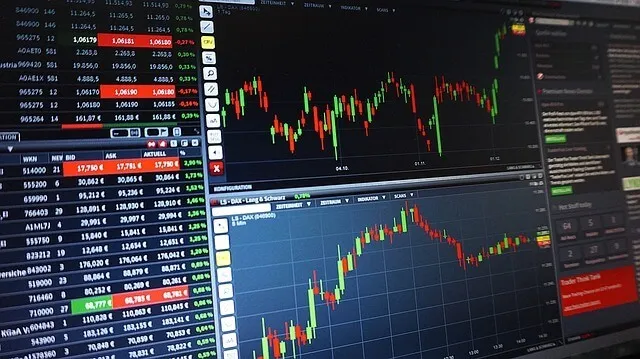
Image Source: Pixabay
One of the portfolio managers who manage Latin American equities once explained how they created a multi-panel map to follow the S&P 500, the Bovespa, the MSCI Emerging Markets index as well as the dollar index all at the same time. It was not to trade all four, but to know what forces were driving conditions in the regional markets which he really cared about. When the dollar shot up and S&P stood still, that combination informed him that there was something particular about the workings of capital flows on Brazilian and Colombian assets. The setup converted a complex macro reading into a clear visual one.
The overlay tools and comparative performance features enable traders to determine relative strength between indices without manual calculations, directly through the chart. The awareness that the Eurostoxx 50 has performed significantly worse than the S&P 500 over a three-month rolling basis informs a trader about what a breakout of European equities may mean. Such contextual background makes entries more specific and risk management more grounded. TradingView charts make this kind of comparative analysis accessible enough to incorporate into a regular workflow without external spreadsheets or data exports.
Alerts complete the tracking process by eliminating the need to be continually on the screen. A trader cannot see all the indices every hour, but a timely notification of an important level in the Nikkei or the FTSE ensures that important price action does not escape their attention just because the focus was on another market. Having the structured layouts, the comparative tools and the alert systems make the global index tracking no longer an overwhelming task but a manageable and really useful process for a trader.

Comments