
Common Mistakes to Avoid When Starting Forex Trading
Mistakes are part of the learning process.
That doesn’t change, regardless of how much preparation is done at the beginning. What tends to matter more is how early certain patterns are recognised. Some mistakes appear repeatedly, especially in the early stages of Forex trading, and they often don’t feel like mistakes at first.
They feel reasonable. That’s why they are easy to repeat.
One of the more noticeable habits is trading too frequently. At the start, activity feels productive. Opening multiple trades gives the impression that more opportunities are being explored. There is movement, engagement, a sense that something is happening.
But after a while, the effect is usually the opposite.
Decisions begin to lose clarity. Trades are taken closer together, sometimes without a clear reason behind them. Small movements start to look more important than they are, and reacting to them becomes almost automatic.
In Brazil, traders who step back slightly from this pattern often notice a difference. Fewer trades create more space to observe what the market is actually doing. Instead of reacting to everything, they begin to choose more carefully.
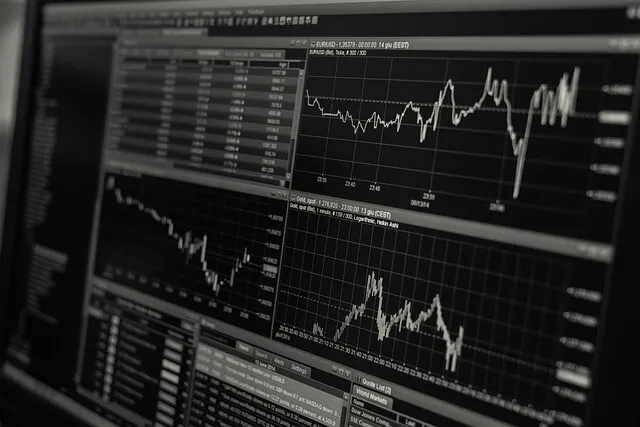
Image Source: Pixabay
That shift is subtle, but it changes how Forex trading is experienced. Another pattern that tends to develop early is changing strategies too quickly.
It usually starts with good intention. Something doesn’t seem to work, so it feels logical to try something else. Then something else again. Over time, this creates a cycle where nothing is tested long enough to be understood properly.
Each strategy requires time.
Not just to learn how it works, but to see how it behaves in different market conditions. Without that time, it becomes difficult to know whether the issue is the approach itself or how it is being applied.
In Forex trading, consistency often reveals more than constant adjustment. Staying with one approach long enough to observe it clearly tends to provide more useful insight than moving between multiple ideas too quickly.
There is also the tendency to focus heavily on potential gains while giving less attention to risk.
At the beginning, this can feel natural. The idea of growth is more appealing, and risk remains something that is acknowledged but not fully experienced. But over time, this imbalance becomes more visible.
Without clear limits, results can shift quickly. A few trades may go well, creating confidence. Then a single larger loss changes the overall balance. This is where risk management begins to feel less theoretical and more practical.
In Brazil, traders who begin to pay attention to risk earlier often develop more stable habits. They are not only thinking about what they might gain, but also what they are prepared to manage if the market moves differently than expected.
With Forex trading, that balance tends to shape long-term consistency.
Emotional decision-making is another factor that often develops gradually.
It is not always obvious in the moment. It can appear as entering a trade slightly earlier than planned, closing it sooner than intended, or increasing position size after a loss. These actions may seem small individually, but over time they begin to affect overall consistency.
What makes this challenging is that emotions are not always easy to recognise while they are happening.
They tend to become clearer afterwards.
This is why awareness plays an important role. Noticing these patterns, even after the fact, creates an opportunity to adjust. It allows decisions to become more deliberate over time.
In Forex trading, emotional control is not about removing emotion completely. It is about reducing its influence on decisions.
Perhaps the most common expectation at the beginning is that progress will happen quickly.
There is often a sense that once the basics are understood, results should follow. When that doesn’t happen, frustration can build.
But learning the market rarely follows a straight path.
There are periods where things seem to make sense, followed by periods where they don’t. This variation is part of the process, even if it feels inconsistent.
For traders in Brazil, adjusting this expectation often makes a difference. Instead of focusing on immediate results, attention begins to shift toward understanding. How decisions are made, how consistently they are applied, and how the process develops over time.
With Forex trading, results tend to follow more naturally once the process becomes clearer.
None of these mistakes are unusual.
In fact, most of them are part of the early experience. The difference is not in avoiding them completely, but in recognising them early enough to make adjustments.
And once that awareness begins to develop, the process itself becomes easier to follow.

Comments