
What Happens to Products Retailers Can’t Sell?
Retail shelves are only one stage in a product’s life. When an item stops selling at the expected pace, a retailer has to decide what to do with it. Keeping it indefinitely uses space and working capital, yet cutting the price in the main store may not always solve the problem. The next step depends on the product, its condition and the retailer’s priorities.
Why stock becomes difficult to sell
Unsold goods do not always mean bad goods. A retailer may have ordered too much, changed a range, reached the end of a season or introduced new packaging. Some products simply lose their place when shelf layouts change. Others sell slowly in one location while still appealing to buyers elsewhere.
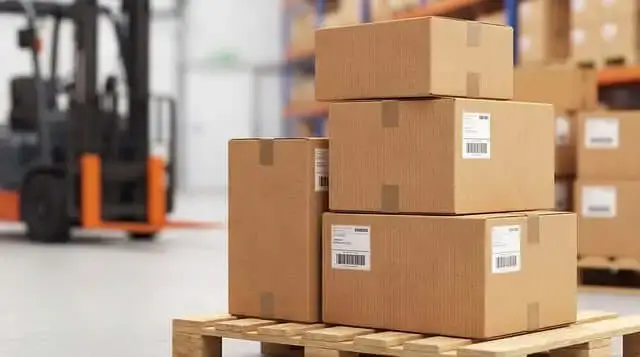
Image Source: Pixabay
Retailers usually try to manage the issue before stock becomes a serious burden. They may reduce prices, move goods between branches, bundle items or promote them through outlet channels. These methods can recover value while keeping the products within the retailer’s own sales network.
When goods leave the main retail channel
If internal clearance is not suitable or does not move enough volume, products may be sold in larger quantities to other businesses. At this point, liquidated stock can enter a secondary market where resellers, exporters, discount shops and online sellers look for inventory.
The purpose is often practical: the original retailer needs space and a faster route for removing goods. A secondary buyer accepts more of the sorting and selling work. That difference explains why bulk lots can contain a mixture of lines rather than the neat selection found in a normal wholesale order.
Some goods may also move through returns processing, recycling, donation or disposal routes, depending on their condition and the options available. There is no single path for every unsold item. Products with damage, missing parts or restrictions on resale require different handling from new, shelf-ready goods.
What secondary buyers actually receive
The phrase liquidated stock can cover many situations, so buyers should avoid assuming that every lot has the same quality. One batch might contain unopened surplus items, while another could include shop-worn packaging or customer returns. A useful description should be read carefully, together with any available photographs or inventory details.
At that point, a reseller’s practical work begins. Goods may need sorting by condition, checking for completeness and dividing into groups suited to different sales channels. Some items can justify individual listings. Others may be more efficient to sell as bundles or through local markets. The value depends partly on how well the buyer can match the stock to an audience.
Why retailers use secondary markets
Holding slow stock has an operational cost. It occupies warehouse or shop space, complicates stock control and can prevent newer lines from moving efficiently through the same system. Selling a batch at a reduced recovery value may therefore be preferable to waiting for every unit to sell at its original price.
For a reseller, that creates access to inventory that may not appear in ordinary wholesale catalogues. The lower buying price, however, is only one part of the calculation. Transport, fees, storage, testing, cleaning, packaging and unsold units can all affect the final result.
For the secondary market, this variety is especially important for buyers. Buyers are not receiving one standard product class with one standard history. They are taking on stock that has reached the end of one commercial route and needs a new one. That makes careful lot assessment more valuable than broad assumptions about why the goods were cleared.
The journey of liquidated stock is best understood as a transfer of responsibility. The retailer gives up some potential selling value in exchange for speed and space. The secondary buyer takes on the work of assessing, preparing and finding customers for the goods. When that transfer is handled carefully, products that no longer fit one retail system can still find a useful place in another.

Comments